
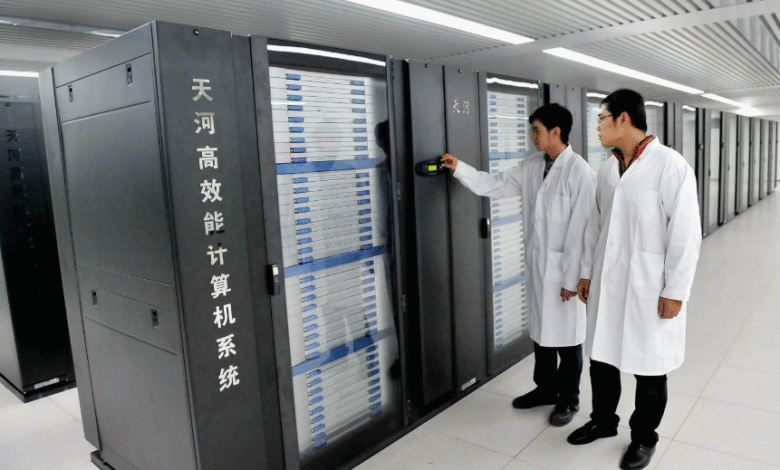
Supercomputers represent a pinnacle of computing technology, engineered for high-performance data processing and analysis. Their architecture features numerous processors operating concurrently, which enables rapid execution of complex calculations. These machines are indispensable in fields like climate modeling and molecular research. Understanding their design and application reveals the profound impact they have on scientific advancement. However, the intricate workings and potential future developments of supercomputers warrant further exploration.
Understanding Supercomputers: Definition and Purpose
Supercomputers represent the pinnacle of computational power, designed to process vast amounts of data at unprecedented speeds.
The supercomputer definition encompasses high-performance systems capable of executing complex calculations rapidly.
Their primary purpose is to tackle intricate problems in fields such as climate modeling, molecular research, and astrophysics, thereby enabling breakthroughs that enhance human understanding and foster innovation in various scientific and technological domains.
See also: gfxmaker
How Supercomputers Operate: Architecture and Functionality
While various computing systems exist, the architecture of supercomputers is uniquely designed to maximize performance and efficiency.
They employ an array of processors that facilitate parallel computing, enabling simultaneous processing of vast data sets.
This configuration significantly enhances processing power, allowing supercomputers to tackle complex computations that traditional systems cannot efficiently manage, thus providing unprecedented capabilities in scientific research and advanced simulations.
Applications of Supercomputers in Modern Science and Technology
As scientific inquiries and technological advancements become increasingly complex, the role of supercomputers in modern research is pivotal. They facilitate advanced data analysis, enabling researchers to process vast datasets efficiently.
Additionally, in climate modeling, supercomputers simulate intricate environmental systems, predicting changes and informing policy decisions. Their computational power is indispensable for tackling multifaceted challenges across diverse scientific disciplines, enhancing understanding and fostering innovation.
Conclusion
In conclusion, supercomputers serve as the backbone of modern scientific inquiry, akin to a high-speed train navigating complex terrains of data. Their unparalleled processing capabilities allow researchers to tackle problems that were once deemed insurmountable, driving innovation across multiple disciplines. As technology continues to evolve, the role of supercomputers will undoubtedly expand, further enhancing our understanding of intricate systems and phenomena, while fostering advancements that have the potential to revolutionize various fields of science and technology.


